Seasonal Promotion Cycles and Their Correlation with New Game Release Timelines in Portable Gambling Networks
Riley Keller · Aug 25, 2026
Seasonal Promotion Cycles and Their Correlation with New Game Release Timelines in Portable Gambling Networks
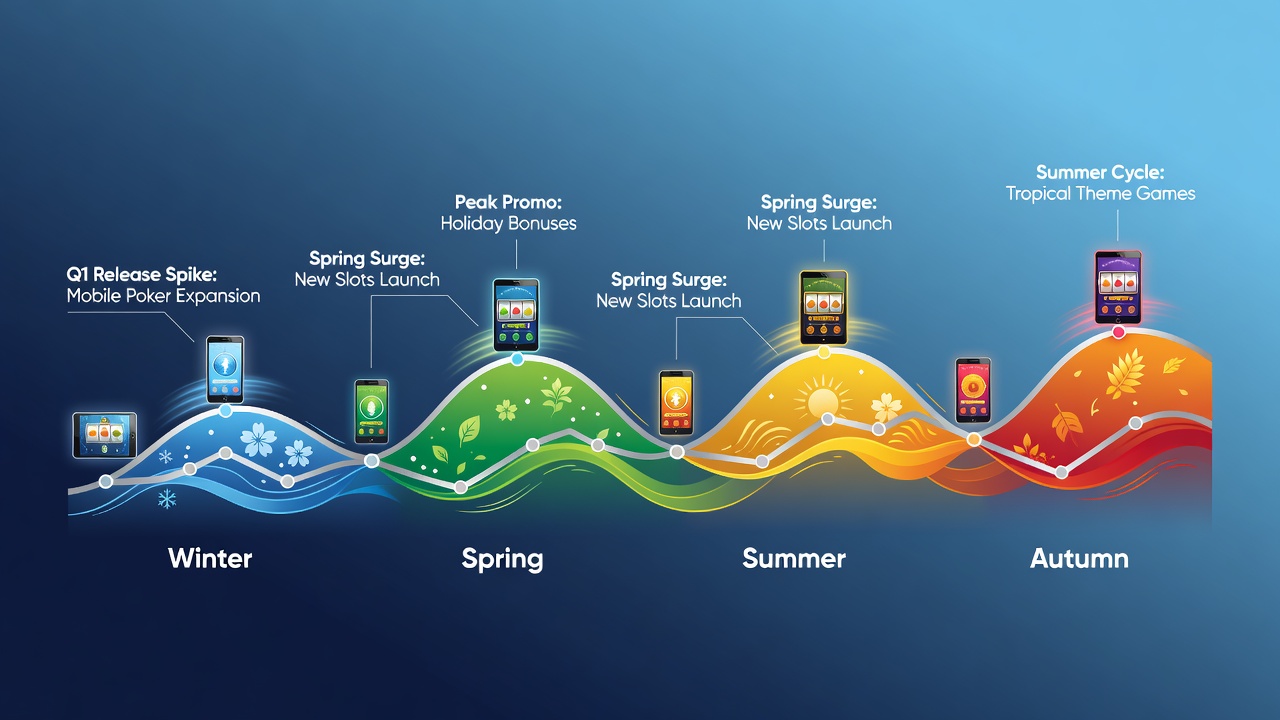
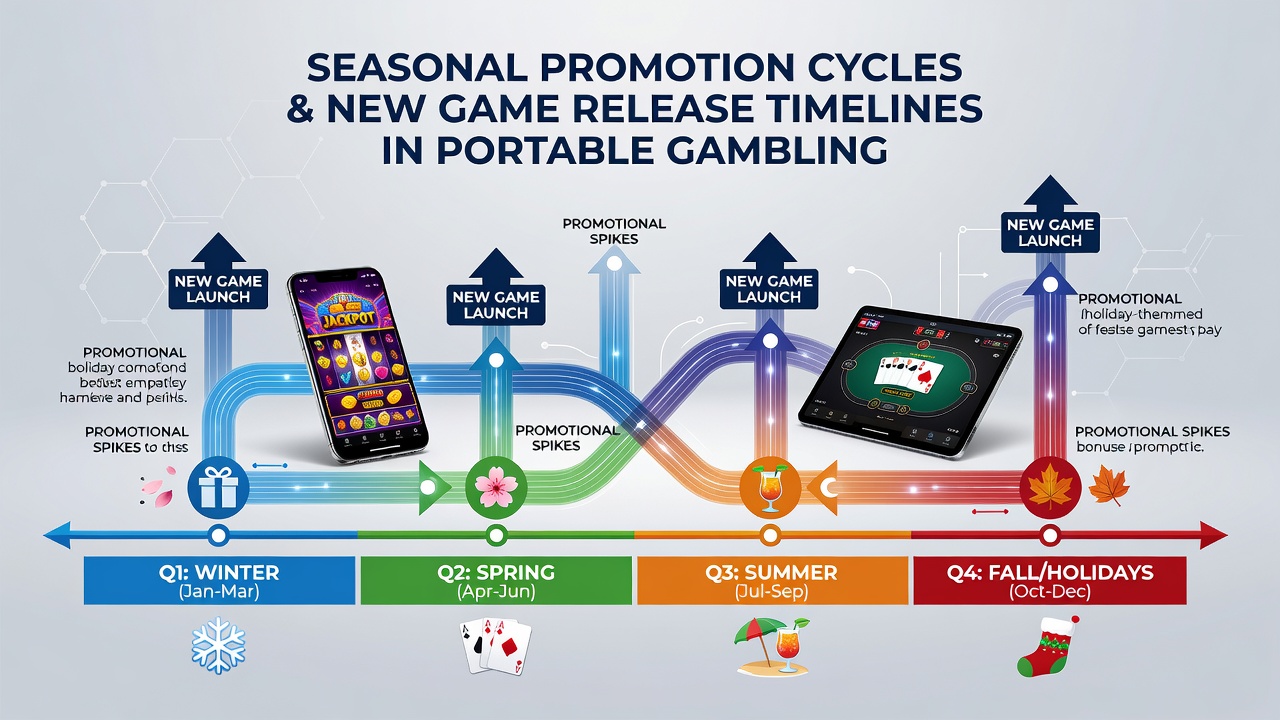
Portable gambling networks operate across mobile devices and tablets where operators align new game launches with recurring seasonal promotion cycles that run throughout the calendar year. Data from multiple jurisdictions shows these alignments produce measurable spikes in both feature activations and user session durations during specific quarters. Researchers tracking release logs from major platforms note that summer campaigns often coincide with themed mechanics that reference outdoor events or travel motifs while holiday windows introduce progressive jackpot pools that build across interconnected titles.
Understanding the Annual Cycle Patterns
Industry reports compiled by regulatory bodies in Nevada and New Jersey indicate that new game introductions peak between October and December when operators run holiday-themed promotions that bundle free spins with deposit matches. These releases frequently incorporate winter iconography and bonus rounds that extend playtime through layered multipliers. By contrast the first quarter tends to feature mechanics focused on accumulation systems that reward consistent logins across February and March when post-holiday engagement typically dips.
Portable networks allow developers to push updates directly to user devices which shortens the gap between a seasonal campaign announcement and the actual game deployment. Analysts examining timestamp data from app stores have documented that titles announced in late summer often reach players within three weeks when tied to back-to-school or end-of-summer promotions. This compressed timeline contrasts with traditional land-based casino schedules that require months of physical preparation.
Regional Data and Timing Correlations
Figures released by the New Jersey Division of Gaming Enforcement reveal that mobile slot downloads increased 22 percent during August 2026 compared with the previous month as several networks introduced beach and festival themed games paired with daily login rewards. Operators in the state coordinated these drops with broader North American campaigns that referenced outdoor events popular during the final weeks of summer. Similar patterns appear in Australian market data where state gaming authorities track mobile revenue alongside new content drops that align with local sporting seasons.
What's interesting is how the synchronization extends beyond simple calendar matching. Developers often embed time-limited events inside new titles so that the promotion window and the game's core loop reinforce each other. One study of cross-device reel networks found that games released during March Madness periods in the United States carried basketball bracket mechanics that mirrored tournament structures and encouraged repeated entries within the same session.
Technical Implementation Across Devices
Portable gambling platforms rely on cloud-based content delivery systems that push new assets to users without requiring full app updates. This infrastructure supports the rapid rollout of seasonal features such as limited-time symbols or bonus wheels that activate only during designated promotion windows. Engineers working on these networks have noted that server-side toggles allow operators to flip game availability on and off in response to real-time performance metrics collected during the campaign period.
European regulators including those under the Malta Gaming Authority have published guidelines that require clear disclosure when seasonal mechanics expire. These rules influence how developers structure release timelines so that new games remain functional after the promotion ends while still delivering the core experience that drew initial downloads. Compliance teams coordinate with marketing departments to ensure the expiration date aligns with the next scheduled content wave.
Impact on Player Behavior Metrics
Longitudinal tracking by university research groups in Canada has shown that users who engage with newly released games during peak promotion periods exhibit higher retention rates over the following 90 days. The data sets examined games released in both summer and winter windows and compared session lengths against control groups that played non-seasonal titles. Results indicated that the correlation holds across different stake levels and device types though the effect size varies by region.
Network operators adjust release cadences based on these behavioral signals. When August campaigns underperform relative to historical averages developers accelerate the next batch of titles rather than extending the current promotion. This responsive approach keeps the content pipeline moving in step with observed engagement curves rather than fixed quarterly calendars.
Conclusion
Portable gambling networks continue to refine the relationship between seasonal promotion cycles and new game release timelines through data-driven scheduling and technical flexibility. Reports from multiple regulatory regions demonstrate consistent patterns where targeted content drops amplify the reach of time-bound offers. As device capabilities and content delivery systems advance these alignments are expected to become even more precise while remaining subject to oversight from authorities that monitor timing and transparency across jurisdictions.