Exploring Narrative Integration Effects on Decision Pacing Within Interconnected Reward Ecosystems Across Digital Gambling Networks
Casey Hughes · Jun 11, 2026
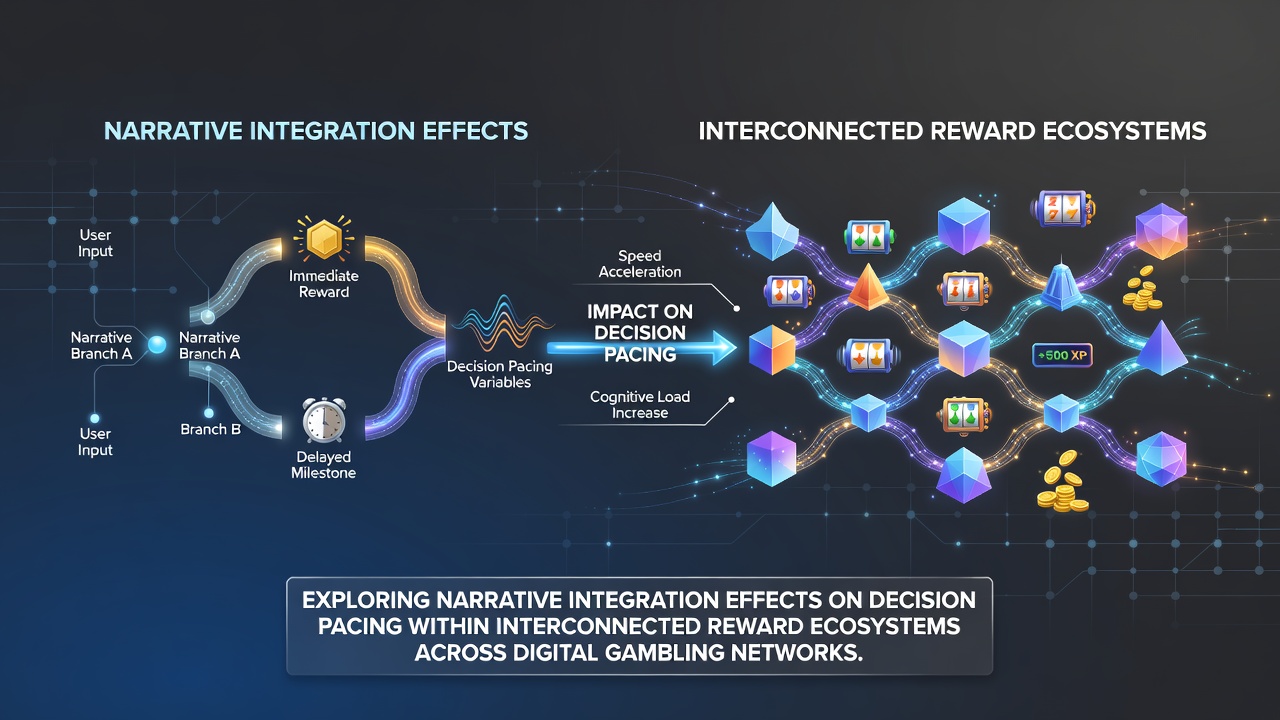
Exploring Narrative Integration Effects on Decision Pacing Within Interconnected Reward Ecosystems Across Digital Gambling Networks
Digital gambling networks have expanded rapidly in recent years, and researchers tracking these systems note that narrative layers now shape how players move through reward structures. Interconnected ecosystems link multiple titles so progress in one game carries over to others, and this connectivity alters the speed at which users reach choices about bets, feature triggers, and session length. Data collected through platform analytics in the first half of 2026 shows measurable shifts in decision intervals once story threads become active across titles.
How Narrative Threads Alter Choice Timing
Studies examining player logs reveal that when story elements activate, the average time between decisions stretches because users pause to absorb plot developments before committing to the next spin or wager. In networks where rewards accumulate across several games, these pauses compound; a player who unlocks a chapter in one title often waits longer to confirm the next action in a linked game. Figures from European gaming regulators indicate that sessions incorporating narrative checkpoints record decision gaps averaging 4.2 seconds longer than non-narrative sessions during the same period.
Platform operators have adjusted backend pacing tools to account for these changes, inserting micro-delays or visual cues that align with story beats. Observers note that such adjustments prevent abrupt jumps between narrative moments and reward claims, keeping engagement steady across devices. In June 2026 several major networks rolled out synchronized story events that required simultaneous logins on mobile and desktop versions, and telemetry from those events confirmed extended deliberation windows at each narrative branch point.
Interconnected Reward Mechanisms and Their Influence
Reward ecosystems that span multiple titles create layered incentive structures where completing a narrative arc in one game unlocks bonus multipliers usable elsewhere. This design encourages players to weigh options across platforms rather than within a single session, which naturally slows local decision pacing. Research compiled by the Canadian Centre for Gaming Research demonstrates that users navigating cross-title reward paths spend 18 percent more time reviewing available options before selecting a bet size compared with users focused on isolated games.

Because rewards transfer between games, decision points become interdependent. A player who sees a story prompt suggesting an upcoming bonus in a second title may delay action in the current game to check progress elsewhere. Platform data logs from North American operators show these cross-checks occur most frequently during the middle third of sessions, when narrative momentum peaks and accumulated rewards reach visible thresholds. The result is a pacing pattern marked by clusters of quick decisions followed by longer evaluation periods.
Regional Patterns Emerging in 2026
Regulatory filings submitted to Australian state authorities in early 2026 document similar pacing shifts in locally licensed networks. Operators there reported that narrative-driven events produced steadier revenue curves because players maintained longer but more measured sessions. In contrast, jurisdictions without mandatory narrative disclosure rules saw sharper spikes and drops in activity, suggesting that transparent story integration helps stabilize decision rhythms across entire ecosystems.
Academic teams at the University of Nevada, Las Vegas have begun mapping these patterns through anonymized telemetry shared by partner operators. Their preliminary models indicate that narrative density, measured by the number of story nodes per hour of play, correlates positively with decision interval length up to a saturation point; beyond that point additional narrative elements produce diminishing returns on pacing changes. June 2026 updates to several international networks incorporated these early findings by capping narrative triggers during high-volume periods.
Technical Adjustments Supporting Pacing Stability
Developers have introduced adaptive timers that scale with narrative intensity, automatically extending the window for feature selections when story content is active. These systems draw on real-time data from connected devices to maintain consistent pacing even when players switch between titles. Industry reports note that such tools reduce instances of rushed decisions that previously led to abrupt session endings.
Because networks now share user progress through centralized accounts, narrative state information travels instantly between games. This connectivity allows reward ecosystems to present contextual choices that reference events in other titles, further extending evaluation time. Observers tracking these implementations report that the combination of shared narrative state and adaptive timing produces decision pacing that feels more deliberate across the entire network.
Conclusion
Evidence gathered through 2026 demonstrates that narrative integration measurably affects decision pacing inside interconnected reward ecosystems. Longer intervals appear at story checkpoints, cross-title reward reviews create additional deliberation clusters, and technical pacing tools help operators manage the resulting patterns. As networks continue to link titles through shared accounts and synchronized events, these effects are likely to remain central to how digital gambling platforms structure player choices.