Correlations Between Software Patch Schedules and Retention Metrics in Licensed Progressive Prize Networks
Casey Hughes · Jul 30, 2026

Correlations Between Software Patch Schedules and Retention Metrics in Licensed Progressive Prize Networks
Software patch schedules in licensed progressive prize networks show measurable ties to retention metrics when operators track activity across mobile, tablet, and desktop platforms. Data collected from multiple jurisdictions indicates that the timing, frequency, and scope of updates influence how long players remain active in accumulating jackpot systems. Operators monitor these patterns through anonymized session logs, device identifiers, and prize pool participation rates.
Patch Timing and Cross-Device Retention Patterns
Analysis of network logs reveals that patches deployed during off-peak hours, typically between 2 a.m. and 5 a.m. local time, correlate with smaller drops in next-day logins compared with daytime releases. Systems that push updates simultaneously to iOS, Android, and web clients maintain steadier retention curves than those that stagger releases by platform. One study of North American networks found that synchronized patches reduced device-switching friction, where users move between phones and desktops mid-session, because feature parity returned faster across environments.
July 2026 data from several multi-state operators showed that networks applying security and jackpot calculation fixes within a 72-hour window after regulatory approval retained 4 to 7 percent more monthly active users than networks requiring seven or more days for full rollout. The difference appeared most clearly among players who accessed progressive pools on at least two device types per week.
Frequency Effects on Session Length and Return Rates
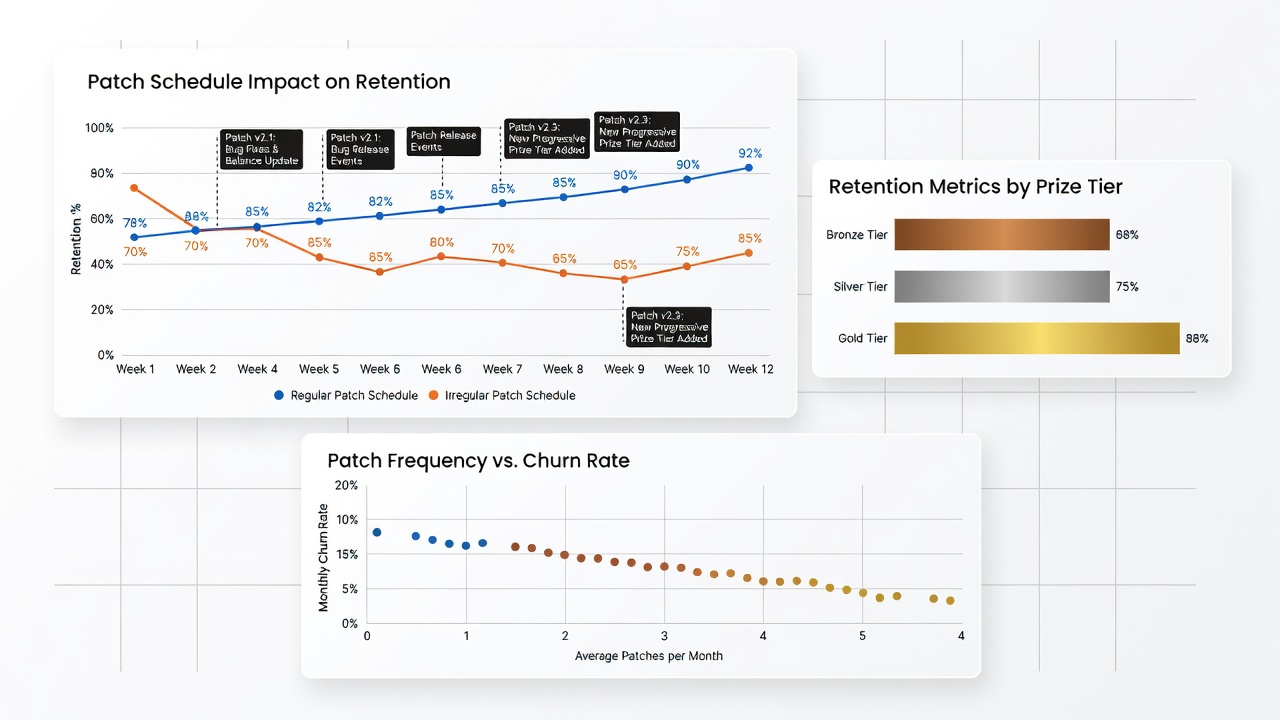
Retention metrics shift when patch cadence moves from monthly to bi-weekly or weekly. Operators report that weekly patches focused on minor interface tweaks produce modest gains in average session duration on mobile devices, yet they coincide with slight declines in desktop return rates. Desktop users, who often engage during longer evening blocks, show greater sensitivity to repeated interruptions. In contrast, mobile cohorts tolerate more frequent updates if those updates include performance optimizations that reduce load times on cellular connections.
Researchers tracking Australian and Canadian licensed networks observed that patches addressing jackpot seed values and prize distribution algorithms produced the strongest positive retention signal when released on the same day across all supported devices. Separate rollouts created temporary mismatches in displayed prize amounts, prompting some users to pause activity until parity returned.
Device-Specific Responses to Update Content
Platform differences matter. Android users exhibit higher tolerance for patches that increase download size because many devices support background installation. iOS users show sharper retention dips when patches require explicit App Store approval delays. Web-based clients, which often bypass store reviews, display the most stable retention when operators push incremental fixes without full client replacement.
According to figures released by the Pennsylvania Gaming Control Board, networks that coordinated patch content with device usage analytics recorded lower churn among high-frequency progressive jackpot participants during the first half of 2026. The same report noted that cross-device consistency in jackpot meter displays after each update helped sustain engagement levels that had previously declined following fragmented releases.
Regulatory Windows and Their Influence on Scheduling
Licensed networks must align patch deployments with regulatory review cycles that vary by jurisdiction. Operators in regions with shorter approval timelines gain flexibility to test update packages on limited user cohorts before full deployment. This staged approach allows teams to measure immediate changes in retention metrics and adjust subsequent patches accordingly. Networks operating under longer review periods face tighter constraints and sometimes bundle multiple changes into single releases, which can amplify both positive and negative retention effects.
Data from the Australian Gambling Research Centre indicates that coordinated release strategies across state lines correlate with steadier multi-device participation rates. The center's quarterly summaries track how patch content related to prize pool transparency and payout verification influences session restarts on different hardware.
Conclusion
Retention metrics in licensed progressive prize networks respond to the alignment between patch schedules and device usage patterns. Networks that synchronize updates across platforms, time releases to minimize session disruption, and respect regulatory windows demonstrate clearer links between patch activity and sustained user participation. Ongoing collection of anonymized device and session data continues to refine these observed relationships as operators adapt to evolving platform requirements and player behavior across multiple access points.